

Cast Iron vs Ceramic vs Stainless Steel: Which to Buy for Indian Cooking
Direct answer: No single material covers every Indian cooking task well. Cast iron is best for high-heat work like dosas, searing, and tadka. Ceramic is best for everyday low to medium heat cooking like sabzi, eggs, and rotis. Stainless steel is best for boiling, dal, and acidic curries where non-reactivity matters. The right kitchen uses two or three of these materials together rather than choosing one. Trying to force any single material to handle the full range of Indian cooking is where most cookware disappointment starts.
TL;DR
-
Cast iron, ceramic, and stainless steel each handle different cooking jobs well. None of them is universally best.
-
Cast iron is the strongest performer for high-heat work: dosas, searing, browning, intense tadkas.
-
Ceramic is the cleanest everyday cooking surface for low to medium heat tasks like sabzi, eggs, and rotis. Used correctly, it lasts years.
-
Stainless steel is the workhorse for non-reactive cooking: dal, acidic curries, boiling, slow cooking.
-
Premium and mass-market versions of ceramic perform very differently. The category has been damaged by cheap ceramic that fails fast.
-
A well-equipped Indian kitchen typically uses two or three of these materials together. Trying to pick one material to do everything is the most common Indian cookware mistake.
Why a Three-Way Comparison Matters
Most Indian cookware decisions get framed as either-or. Cast iron versus ceramic. Ceramic versus non-stick. Stainless steel versus non-stick. The result is usually a single-pan answer that handles some Indian cooking well and other Indian cooking poorly.
The three-way comparison is more useful because it reflects how Indian cooking actually works. Different dishes need different cooking environments. Dosa wants a porous, high-heat surface. Sabzi wants a smooth, easy-clean surface at moderate heat. Dal wants a non-reactive pot that can simmer for hours without affecting the food. These are three different jobs, and the materials that handle them best are three different materials.
A note on non-stick: this comparison deliberately excludes Teflon-coated non-stick because the heat tolerance issue makes it a difficult fit for the high-heat work that defines much of Indian cooking. Non-stick is covered separately in the ceramic vs non-stick comparison. The three materials in this article are the ones that genuinely handle Indian cooking across the full range of dishes.
Cast Iron: The High-Heat Specialist
Cast iron is the highest-performing material for high-heat Indian cooking. The thermal mass holds heat steadily, which matters for dishes where temperature stability is the difference between success and failure. Dosas need consistent high heat across the entire surface. Searing needs the pan to stay hot when food touches it. Heavy tadkas need oil that does not lose temperature when spices go in.
For these tasks, cast iron outperforms ceramic and stainless steel meaningfully. The seasoning that builds up over months of use creates a cooking surface that handles dosa batter better than most dedicated dosa pans, simply because it has been built up through hundreds of cooking cycles.
The trade-offs are real. Cast iron is heavy. The handle gets hot. Raw cast iron requires seasoning over time, which means a learning curve. Slow-cooked acidic dishes like tamarind sambar or long tomato gravies can affect the seasoning layer on raw cast iron over time.
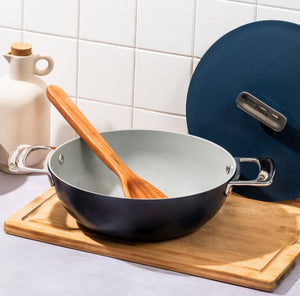
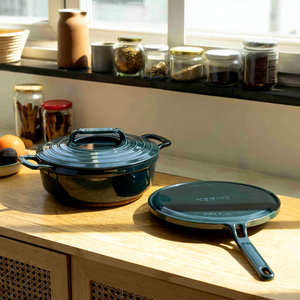
Coated variants like Ember's TitaniumClad address some of these trade-offs. The titanium-reinforced enamel coating provides a built-in non-reactive surface that is safe for acidic cooking and does not require traditional seasoning. The weight remains, but the maintenance learning curve is essentially gone. For households that want cast iron performance without the seasoning commitment, coated cast iron is the simpler entry point.
Best for: dosas, searing, browning, intense tadkas, parathas with crisp finish Weaker for: delicate egg cooking, light sautéing, slow acidic curries (raw cast iron only) Longevity: decades with reasonable care
Ceramic: A Deliberate Choice, Not a Middle Option
Ceramic deserves to be understood as a deliberate choice, not as the compromise between cast iron and non-stick. The coating is mineral-based, made from natural materials, and free of fluoropolymer chemistry. For health-conscious cooks doing daily Indian cooking at low to medium heat, ceramic is the most suitable material available, not a fallback option.
Ceramic is the cleanest everyday cooking surface. Sabzi, eggs (with a small amount of oil), low-oil daily cooking, sautéed vegetables, and rotis all sit squarely in ceramic's strength zone. The coating wipes clean easily, requires less oil than non-stick or stainless steel, and does not react with food.
Where ceramic does not perform is sustained high heat. Dosa cooking, in particular, damages ceramic quickly. Searing and intense tadkas pushed to maximum gas flame degrade the coating over time. Ceramic asks for the cook to adjust their default heat habits down to low or medium, which most cooks can do once they understand why.
The other consideration is that ceramic asks for a specific set of handling habits: no thermal shock, gentle utensils, hand washing rather than dishwasher. None of these are difficult, but they need to be communicated to everyone using the cookware. In households where multiple people use the same pans, including domestic help, a short list pinned in the kitchen handles this.
Best for: daily low to medium heat cooking, eggs, sabzi, rotis, low-oil dishes Weaker for: dosas, sustained high heat work, deep frying Longevity: three to five years with proper care, often longer for premium ceramic
Stainless Steel: The Underrated Workhorse
Stainless steel is the material that gets the least attention in modern Indian kitchens but earns the most respect once cooks use it correctly. It is non-reactive, durable, and handles acidic cooking better than almost any other material. For dal, sambar, tamarind-based curries, tomato gravies, and long-simmered dishes, stainless steel is often the right choice.
The non-reactive property is what makes stainless steel particularly valuable for Indian cooking. Many Indian dishes involve long cooking times with acidic ingredients. Stainless steel does not interact with these ingredients in the way raw cast iron or uncoated aluminium can. The food stays as the recipe intended.
The trade-off is the learning curve. Stainless steel is not non-stick by default. Used correctly, with proper preheating and the right amount of oil, food releases cleanly. Used incorrectly, particularly for eggs and delicate proteins, it can be frustrating. Triply construction (stainless steel with an aluminium or copper core) addresses the heat distribution issues that single-layer stainless steel can have, which is worth paying for if stainless steel is going to be a workhorse pan.
The longevity case is unmatched. A well-made stainless steel pot can last decades or longer. There is no coating to degrade, no seasoning to maintain, and no surface that wears out. For households thinking about cookware as a long-term investment, stainless steel pots and pans are often the highest return.
Best for: dal, sambar, acidic curries, boiling, slow cooking, anything where non-reactivity matters Weaker for: dosas, easy egg cooking, anyone expecting non-stick behaviour Longevity: decades, often a lifetime
Head to Head by Cooking Task
The most useful way to evaluate three materials is by cooking task, not by overall ranking. This table shows where each material genuinely performs well, where it is workable but not ideal, and where it should be avoided.
|
Cooking Task |
Cast Iron |
Ceramic |
Stainless Steel |
|
Dosa |
Excellent |
Not suitable |
Workable with skill |
|
Roti and paratha |
Excellent |
Good |
Workable |
|
Sabzi (everyday vegetables) |
Good |
Excellent |
Good |
|
Tadka and tempering |
Excellent |
Use low heat only |
Workable |
|
Eggs |
Good once seasoned |
Excellent |
Possible with practice |
|
Dal and slow-cooked lentils |
Workable |
Workable |
Excellent |
|
Sambar and tamarind curries |
Avoid raw cast iron |
Good |
Excellent |
|
Tomato-based gravies |
Avoid raw cast iron |
Good |
Excellent |
|
Deep frying |
Excellent |
Not recommended |
Excellent |
|
Searing and browning |
Best choice |
Not suitable |
Good (triply) |
|
Shallow frying paneer |
Good |
Excellent |
Workable |
|
Boiling pasta, rice, vegetables |
Workable |
Workable |
Excellent |
|
Slow cooking and braising |
Excellent (enamel only) |
Good |
Excellent |
|
Low-oil everyday cooking |
Good once seasoned |
Excellent |
Good |
The most important observation from this table is that no single column has "excellent" entries across all tasks. That is the point. The right kitchen uses multiple materials, each for the tasks where it genuinely outperforms the others.
Not All Ceramic Is the Same
Most negative ceramic reviews in India are about cheap ceramic where the coating failed in months. A premium ceramic pan with a thicker, multi-layer coating from a manufacturer with rigorous quality control is a different product entirely. They share a category label and almost nothing else.
Ember's ceramic cookware is manufactured in Italy at a facility with a longstanding history in ceramic coating production. Italian ceramic manufacturing has the deepest accumulated expertise in coating formulation and application, reflecting decades of refinement in the supply chain and skill base. This translates to more consistent coating thickness, more refined mineral formulations, and more reliable quality control than mass-market ceramic manufacturing can typically achieve. The Arcilla coating used on Ember ceramic is mineral-based and independently tested and certified by SGS, free of PTFE, PFOA, PFAS, lead, and cadmium.
The case for paying more for ceramic rests on coating longevity (years rather than months), performance consistency across the surface and over time, and material traceability that lets buyers verify what they are paying for. For daily cooks, the long-term math usually favours premium ceramic over repeated mass-market replacements.
This matters in a three-way comparison because the ceramic column in the table above assumes quality ceramic. A cheap ceramic pan will not deliver "excellent" performance for sabzi over multiple years. It will perform well for the first few months and degrade. The material category is only as good as the specific pan you buy.
What a Well-Equipped Indian Kitchen Looks Like
The most useful frame for a three-way comparison is not which material to choose, but how the three materials work together in a working kitchen. A well-equipped Indian kitchen typically uses some combination of:
Cast iron tawa. For dosas, rotis with crisp finish, and parathas. The single most important high-heat tool in an Indian kitchen.
Cast iron kadai or coated cast iron pan. For high-heat sautéing, searing, browning, and heavy tadka. Coated cast iron (like TitaniumClad) handles the acidic dishes raw cast iron struggles with.
Ceramic frying pan or kadai. For everyday low to medium heat cooking. Sabzi, eggs, rotis without high heat, low-oil dishes. The most-used pan in most Indian households.
Stainless steel pot. For dal, sambar, boiling, slow cooking, and acidic curries. Often a triply-construction piece if budget allows.
This is not a recommendation to buy four pans at once. It is the shape a well-equipped kitchen tends to take over time. Most households can start with one or two pieces and add over months or years as the daily cooking patterns reveal which materials get used most.
For households building from scratch, the most common useful starting point is a ceramic frying pan plus a cast iron tawa. That combination covers a wide range of Indian cooking and gives the cook real experience with two very different materials before adding more. Stainless steel typically comes next, often as a triply pot for daily dal.
How to Choose Your First Material
For households that genuinely have to pick one material to start with, the right answer depends on what you cook most:
Start with cast iron if: You cook dosas regularly, you do a lot of high-heat work, or you already own decent ceramic or non-stick for everyday cooking.
Start with ceramic if: Your daily cooking is mostly sabzi, eggs, and low to medium heat work, or you are upgrading from old non-stick and want the most natural transition piece.
Start with stainless steel if: Your cooking is heavy on dal, acidic curries, and slow cooking, or you value cookware that lasts decades without any coating concerns.
The mistake to avoid is starting with the material that has the most marketing visibility. The right starting point is the material that fits how you actually cook, even if that material is the least glamorous of the three.
FAQ: Cast Iron vs Ceramic vs Stainless Steel
Which material is healthiest?
Quality ceramic and enamel cast iron are both very safe because the cooking surfaces are inert and do not contain fluoropolymer chemistry. Raw cast iron adds trace iron to food, which is generally considered beneficial. Stainless steel is non-reactive and well-studied for safety. All three are safe for daily cooking. The choice between them is about cooking style and performance, not safety.
Which material is most durable?
Stainless steel and cast iron typically last decades, often a lifetime. Premium ceramic typically lasts three to five years of daily use, often longer with proper care. For pure longevity, stainless steel and cast iron are unbeatable. For everyday non-stick performance, ceramic is the more practical choice within its shorter but still substantial lifespan.
Can ceramic replace cast iron for dosas?
No. Dosa cooking requires sustained high heat that ceramic cannot handle without damaging the coating. Cast iron is the right material for dosas. This is the single clearest case where the three-way comparison produces a definitive answer rather than a "depends on use case" answer.
Is stainless steel actually good for everyday cooking?
Yes, with practice. Stainless steel handles a wider range of Indian cooking tasks than most people realise, including sabzi, eggs, and shallow frying. The learning curve is real because stainless steel is not non-stick by default, but cooks who learn proper preheating and oil technique find that triply stainless steel is one of the most versatile materials in the kitchen.
Should I buy raw cast iron or coated cast iron?
It depends on cooking style and maintenance tolerance. Raw cast iron rewards the cook who is willing to build up a seasoned surface over months. Coated cast iron (enamel or TitaniumClad) is ready to use on day one, requires less maintenance, and handles acidic cooking that raw cast iron struggles with. For households with multiple users or domestic help, coated is often the easier choice. For cooks who enjoy the seasoning process, raw cast iron has its own rewards.
Which is best for someone replacing old non-stick?
Ceramic is the most natural transition. The handling adjustment is smaller than moving to cast iron or stainless steel, and the cooking results for everyday low to medium heat tasks are similar to non-stick without the heat-related concerns. Start with one ceramic frying pan before replacing the entire set.
Is enamel cast iron the same as TitaniumClad?
They are related but not identical. Enamel cast iron is cast iron with a glass-based enamel coating, which provides a non-reactive surface. TitaniumClad is Ember's titanium-reinforced enamel coating, which adds durability over standard enamel. Both share the core benefits of coated cast iron: non-reactive surface, no seasoning required, safe for acidic cooking. TitaniumClad is positioned as more durable for heavy daily use.
Can I use the same pan for everything?
You can, but you will compromise on something. Every single-pan choice is a trade-off. A cast iron pan used for everything will require more maintenance than ceramic. A ceramic pan used for everything will not handle dosas or high-heat searing well. A stainless steel pan used for everything will frustrate when cooking eggs. The two-or-three-pan approach is what most well-equipped Indian kitchens settle into over time.
Bottom Line
Cast iron, ceramic, and stainless steel are not competing for the same cooking job. They are complementary materials that handle different tasks well. The right kitchen uses two or three of them together, each for the cooking it does best.
For high-heat Indian work like dosas, tadkas, and searing, cast iron is the clear answer. For everyday low to medium heat cooking like sabzi, eggs, and rotis, ceramic outperforms the other two. For dal, acidic curries, and slow cooking where non-reactivity matters, stainless steel is the right choice.
The cookware decision that fails most often is choosing one material and asking it to do everything. The cookware decision that works most often is being honest about which two or three materials cover the way you actually cook, then building a small set around that. None of this requires owning more cookware than necessary. It requires owning the right cookware for the cooking you actually do.
