

Direct answer: Food sticks to ceramic, cast iron, or non-stick pans when the pan is not hot enough, not because the cookware is defective. The fix is a simple four-step sequence: preheat the empty pan for 2 to 3 minutes, check that it is ready with the water droplet test, add oil and wait for it to shimmer, then leave the food undisturbed until it loosens on its own. This sequence works across ceramic, titanium-enamel cast iron, and traditional non-stick pans. Skip any one of these four steps, and sticking is almost guaranteed.
Key Takeaways
-
Food sticks when the pan isn't heated properly before cooking starts, not because the pan itself is defective.
-
The water droplet test tells you when a pan is ready: it should bead up and glide across the surface, not sizzle away instantly or sit and boil.
-
Oil goes in only after preheating, and food goes in only after the oil ripples. Skipping either step is what causes most sticking.
-
Sticking right after food hits the pan is normal. It loosens on its own as it cooks, so moving it too soon is what tears it and leaves it stuck.
-
The four-step sequence: preheat, oil, shimmer, patience- works the same way for eggs, paneer, fish, and dosa, and across ceramic and titanium-enamel cast iron alike.
Why Does Food Stick to Ceramic, Cast Iron, or Non-Stick Pans?
Food usually sticks to your pan when the cooking surface is cold or not heated enough. Proteins and starches can bond to the tiny pores on the surface, making food harder to move.
However, once the pan gets hot enough, a thin layer of steam forms between the food and the surface. This reduces the sticking, and this is exactly why a water droplet beads up and moves across a hot pan instead of evaporating right away.
The exact temperature varies for ceramic, cast iron, and non-stick pans, but the practical takeaway is the same: proper heating matters more than the type of pan when it comes to preventing food from sticking.
How Do I Know When My Pan Is Ready to Cook On?
Use the water droplet test. Place the empty pan on medium heat for 2 to 3 minutes, then sprinkle a few drops of water onto the surface.
-
If the water sizzles and vanishes instantly, the pan is too hot. Take it off the heat for a moment.
-
If the water sits and slowly boils: the pan isn't hot enough yet. Keep heating.
-
If the water forms small beads and moves across the surface: the pan is ready. Add oil and start cooking.
How Much Oil to Use and When to Add It?
You should add oil only after the pan is preheated, not before. Oil added to a cold pan heats unevenly and can start smoking before the pan reaches the right temperature. This will make it tougher to get the pan ready for cooking.
For most Indian dishes, a tablespoon of oil or ghee is enough to cover the base of a standard frypan or kadai in a thin, even layer. Once you add the oil, wait until you can see a light ripple across the surface before adding your food.
A gentle shimmer is right for delicate foods like eggs, while a slightly stronger shimmer is needed for paneer or fish. If the oil starts smoking, lower the heat slightly.
How Do I Stop Eggs From Sticking to the Pan?
Eggs are a good test of your cooking technique because they can stick quickly if the pan isn't properly heated.
-
Preheat the pan for 2 to 3 minutes on medium heat.
-
Use the water droplet test to check if it's ready.
-
Add about a tablespoon of ghee or oil for 6 to 8 eggs.
-
Wait until you see the oil lightly ripple, then add the beaten eggs.
-
Let them sit without stirring for about 20 seconds, then gently fold them with a spatula.
-
Take the pan off the heat while the eggs still look slightly underdone. The heat left in the pan will finish cooking them.
Fried eggs and omelettes follow the same steps: preheat, add oil, wait for the ripple, then add the eggs and let the whites set before trying to flip them.
How Do I Keep Paneer, Tofu, or Fish From Sticking?
Firstly, pat the pieces dry with a kitchen towel. Too much moisture on the surface can make food stick and also stop it from getting a nice golden colour.
-
Preheat the pan well before adding the oil.
-
Add oil and wait until you see a clear ripple.
-
Place the pieces in the pan without placing them too close together.
-
Leave them alone for at least 2 minutes before flipping.
-
Flip once the piece comes away from the pan easily, cook the other side, then remove it.
For fish, use a little more oil and medium-low heat instead of high heat. High heat can make the outside stick before the inside is cooked.
How Do I Stop Dosa From Sticking to the Tawa?
Dosa batter is thin and spreads quickly, so getting the heat right matters more here.
Preheat the tawa on medium heat, then lower the heat to medium-low just before spreading the batter. Add a few drops of oil around the edges of the dosa so it comes off easily when it's time to flip.
If the batter sticks right away, the surface is either too cold or too hot. Use the water droplet test, adjust the heat, and try the next dosa. Most dosa sticking problems come from getting the heat wrong rather than from the tawa itself.
What Mistakes Make Food Stick Even When You're Doing Everything Right?
-
Adding food to a cold pan. This is the biggest cause of sticking. A cold pan can make food stick as soon as it touches the surface. Preheating for 2 to 3 minutes may feel like extra time, but it will save you from scrubbing the pan later.
-
Using too little oil. You don't need a lot of oil, but you need enough to cover the pan in a thin, even layer so the food does not touch the bare surface.
-
Cooking on the wrong heat. High heat may seem faster, but it can cause food to cook unevenly or burn before it loosens from the pan. For most Indian home cooking, medium heat gives you better control.
-
Moving food too soon. Food may stick briefly when it first touches a hot pan. If you flip or move it too early, it can tear. Wait until it loosens on its own before moving it.
Which Cookware Helps Prevent Sticking: Ceramic or Titanium-Clad Cast Iron?
Technique matters with any cookware, but the type of cookware you use also makes a difference.
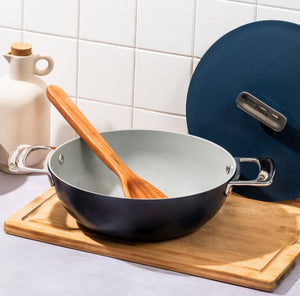
Ceramic: Ember's ceramic cookware uses the Arcilla™ coating, made from clay and water and free from PTFE, PFOA, PFAS, lead, and cadmium. It's made for everyday cooking, from eggs to stir-fries, and needs less oil without affecting flavour or texture. Use it on low to medium heat with a little oil and wooden or silicone utensils.
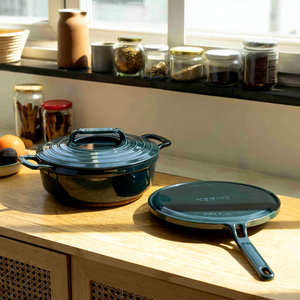
TitaniumClad™ cast iron: Ember's TitaniumClad™ cast iron cookware uses a titanium-reinforced enamel coating fused onto the cast iron at very high temperatures.
It combines cast iron's heat retention with an easier-to-maintain enamel surface. It doesn't require traditional seasoning. For better release, use low to medium heat, add a thin layer of oil before cooking, and let food release naturally before moving it.
Whichever one you use, the basics are the same: preheat the pan, add oil, wait for it to ripple, and give the food some time to loosen before moving it.
Bottom Line
Food sticking usually comes down to the pan, oil, and food not being handled in the right order. Preheat the pan for 2 to 3 minutes, use the water droplet test to check if it's ready, add the oil and wait for it to ripple, then leave the food alone until it loosens on its own. The same steps work for eggs, paneer, fish, and dosa, whether you're cooking on ceramic or titanium-enamel cast iron.
Get these four steps right, and most sticking complaints will be gone, regardless of which pan is on the stove.
FAQ
Can I cook eggs without them sticking if I don't have traditional Teflon non-stick?
Yes. Eggs can release cleanly from ceramic or titanium-enamel cast iron when you preheat the pan properly. Use the water droplet test to check if it's ready, add ghee or oil, wait for it to ripple, then add room-temperature eggs. Let them sit for about 20 seconds before the first stir.
How do I know when my pan is ready without a thermometer?
Sprinkle a few drops of water onto the preheated pan. If the water forms small beads and moves across the surface without drying up right away, it's ready. If it sizzles and disappears, it's too hot. If it sits and slowly boils, keep heating.
What temperature should I preheat my pan to?
Most home stovetops reach the right temperature within 2 to 3 minutes on medium heat. The water droplet test is more reliable than a set temperature, since burner strength and pan thickness change how quickly a pan heats up.
Why does my dosa stick even when the tawa looks hot?
A tawa can look hot without being at the right temperature. Use the water droplet test before pouring the batter. If the tawa is too hot or not hot enough, the dosa can stick.
Why Does Food Still Stick Even After You Add Oil?
Food can still stick for a short while even after you add oil. As it cooks and forms a light crust, it usually starts to loosen on its own. Give it some time before you try to move, flip, or stir it.
Does the type of cookware matter if my technique is good?
Good technique prevents most sticking on any cooking surface. The coating can affect how easily food releases and how much oil you need, but it doesn't replace preheating, adding oil, and giving the food time to loosen.
