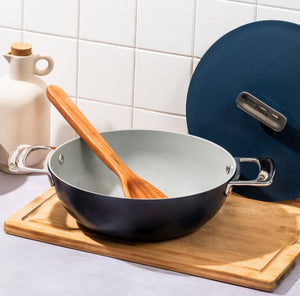
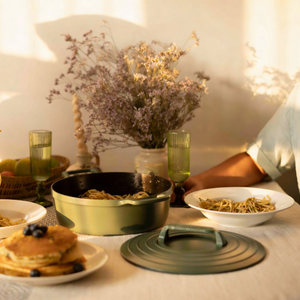
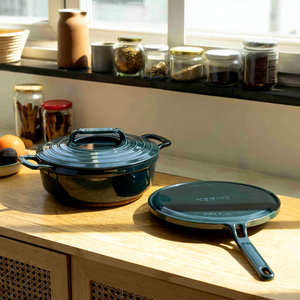


Mumbai's most beloved street food, made in one pot. We cook this bhaji low and slow in the Ember Cast Iron Dutch Oven until the vegetables are completely broken down and the butter has worked its way into every bit of the masala. Serve it straight from the pot with toasted pav and a squeeze of lemon — exactly the way it should be.
Prep time: 15 mins
Cook time: 45 mins
Total time: 55-60 mins
Serves: 4-6
Ingredients for the Vegetables
-
2 medium Potatoes, boiled and mashed
-
1 cup Cauliflower, boiled and mashed
-
½ cup Green peas, boiled
-
½ cup Capsicum, finely chopped
-
2 medium Carrots, boiled and mashed
-
2 tbsp Beetroot, boiled and mashed (optional, for colour)
Ingredients for the Pav Bhaji
-
4 tbsp Butter
-
1 tsp Cumin seeds
-
2 medium Onions, finely chopped
-
1 tbsp Ginger garlic paste
-
1 Green chilli, finely chopped
-
4 medium Tomatoes, finely chopped
-
1 tbsp Pav bhaji masala
-
1 tsp Red chilli powder
-
1 tsp Rurmeric powder
-
½ tsp Coriander powder
-
All the mashed and boiled vegetables
-
1 cup Water
-
½ tsp Kasutri methi, crushed
-
1 tbsp Pav bhaji masala, to finish
-
Juice of half a lemon
-
Salt to taste
-
2 tbsp Butter, to finish
For the Pav
-
8 pav Pav/ Buns
-
2 tbsp Butter
-
A pinch of pav bhaji masala
For Garnish
-
Fresh Coriander, finely chopped
-
1 medium Onion, finely chopped
-
Lemon wedges
-
Butter, to serve on top
-
Grated cheese (optional)
Method
Step 1
Boil the potatoes, cauliflower, carrots, green peas and beetroot until completely soft. Mash them together coarsely and keep aside.
Step 2
In the Ember Cast Iron Dutch Oven, heat butter on medium flame. Add the cumin seeds and let them splutter.
Step 3
Add the chopped onions and sauté for 4 to 5 minutes until golden brown.
Step 4
Add the ginger garlic paste and green chilli. Saute it for a minute until the raw smell disappears.
Step 5
Add the chopped tomatoes and salt. Cook until the tomatoes break down completely and the butter begins to separate from the masala.
Step 6
Add the pav bhaji masala, red chilli powder, turmeric powder, and coriander powder. Stir well and cook for 2 minutes until the spices are fragrant and well combined.
Step 7
Add the chopped capsicum and cook for 1 minute only, so it retains some freshness and releases flavour gradually while simmering. The capsicum should retain a slight crunch at this stage.
Step 8
Add all the mashed vegetables to the pot. Mix thoroughly and mash further directly in the pot using a potato masher. Pour in the water and stir well until the bhaji reaches a thick but flowing consistency.
Step 9
Cook on medium-low flame for 15 to 20 minutes, stirring and mashing occasionally. The cast iron retains heat evenly here, helping the bhaji deepen in colour and flavour without sticking to the bottom.
Step 10
Add the crushed kasuri methi, remaining pav bhaji masala, butter, and lemon juice. Stir well and simmer for 2 more minutes. Adjust salt if needed.
Step 11
To toast the pav, heat a tawa or a flat pan. Add butter and a pinch of pav bhaji masala. Place the pav cut side down and toast until golden and crisp on the inside.
Step 12
Serve the bhaji hot directly from the Ember Cast Iron Dutch Oven, topped with a dollop of butter. Garnish with fresh coriander, chopped onions, a generous squeeze of lemon, and grated cheese if desired. Serve immediately with toasted pav.
Note:
-
The more you mash and simmer the bhaji, the deeper and smoother the flavour becomes.
-
A small amount of beetroot enhances the classic street-style colour without noticeably affecting the taste.
-
The bhaji thickens as it rests because of the heat retention of cast iron; loosen with a splash of warm water while reheating if needed.
