

Direct answer: The right tawa depends on what you cook most often. Cast iron works well for dosa because it heats evenly and holds temperature well. Ceramic works well for everyday rotis and parathas because it needs less oil and is easier to clean, though it is not built for dosa. Stainless steel sits somewhere in between: it has no coating to wear out, but it needs more oil and closer attention to heat. Many Indian kitchens end up with more than one tawa because no single material handles every dish equally well.
TL;DR
-
Cast iron works well for dosa because it heats evenly and holds temperature well.
-
Ceramic needs less oil, is lighter, and is easier to clean, making it a practical choice for everyday rotis and parathas. It's not built for dosa.
-
Stainless steel has no coating to wear out, but it needs more oil and more attention to heat to prevent sticking.
-
We offer two cast iron tawas: a pre-seasoned tawa with a smoother surface that gets better with use, and a TitaniumClad™ tawa designed for everyday, low-maintenance cooking.
-
What you already own and how much maintenance you're willing to do matter more than choosing one single "best" material.
What Is a Tawa, and What Types Are Used in Indian Cooking?
A tawa is a flat or slightly curved pan used for rotis, parathas, dosas, and other flatbreads. The three materials you'll come across most often:
-
Cast iron: Holds heat well and is the traditional choice for dosa.
-
Ceramic non-stick: light, needs less oil, easy to clean.
-
Stainless steel: strong, long-lasting, no coating to wear away.
Each needs a different level of heat and care, so the right pick depends on what you cook most and how much maintenance you're up for.
Note: These are general characteristics of each material. The actual weight, heat performance, and maintenance needs can vary depending on the tawa’s design and construction.
|
Cast iron |
Ceramic |
Stainless steel |
|
|---|---|---|---|
|
Best for |
Thin, crispy dosa |
Everyday roti, paratha |
Durability, no coating to wear out |
|
Heat needed |
Low to medium |
Low to medium |
Medium, needs attention |
|
Oil needed |
Add a little oil before cooking. |
Very little |
More than ceramic |
|
Maintenance |
Depends on cast iron type |
Low; avoid metal utensils |
Cleaning attention, no seasoning |
|
Weight |
Heavy |
Light |
Light to moderate |
|
Limitation |
Heavy; may require seasoning depending on the material. |
Not built for high-heat dosa |
Needs oil + technique to avoid sticking |
Is Cast Iron a Good Tawa for Dosa?
Cast iron works well for dosa because it heats evenly and retains heat well, helping you cook the dosa evenly across the tawa for a crisp finish.
Advantages:
-
Holds temperature well for even cooking
-
Builds a natural non-stick surface with seasoning
-
Very durable
Limitations:
-
Can be heavier than other tawa materials
-
Pre-seasoned cast iron needs seasoning maintenance
-
Needs to be dried thoroughly after washing
Is Ceramic Tawa Good for Everyday Rotis and Parathas?
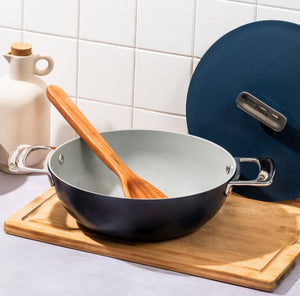
Yes, especially if you mostly cook rotis, parathas, and thicker flatbreads rather than thin, restaurant-style dosas. Our ceramic tawa has a coating free from PFAS, PFOA, PTFE, lead, cadmium, and other forever chemicals, helping food release easily with very little oil. The Ceramic Flat Pan is designed for everyday flatbreads like rotis and parathas. For making dosa, we recommend a cast iron tawa instead.
Advantages:
-
Needs very little oil for cooking.
-
Easy to clean and does not need seasoning.
-
Lighter than cast iron and easier to handle.
-
Free from PFAS, PFOA, PTFE, lead, cadmium, and other forever chemicals.
Limitations:
-
Needs low to medium heat, as high heat can damage the coating.
-
Not built for the sustained high heat crispy dosa needs.
-
The coating can wear down over time with daily use.
-
Should not be put under cold water right after cooking, as sudden temperature changes can damage it.
Is Stainless Steel a Good Material for a Tawa?
Stainless steel works well if you want a tawa that lasts without worrying about seasoning or coating wear, and you’re comfortable using more oil and paying attention to heat while using it.
Advantages:
-
Doesn't react with acidic ingredients.
-
No coating that can scratch or wear away.
-
Lighter than cast iron, easy to handle.
-
Lasts a long time with minimal special care.
Limitations:
-
Not naturally non-stick, so you need oil and the right technique.
-
Can develop hot spots without an aluminium or copper core.
-
Needs more attention to timing and heat.
-
Takes some time getting used to if you're switching from non-stick.
How Do I Choose the Right Tawa for My Cooking Style?
Choose cast iron if:
-
You regularly make thin, crispy dosa
-
You want good heat retention and even heating
-
You're comfortable with seasoning and maintaining traditional cast iron
-
Durability matters more to you than convenience
Choose ceramic if:
-
You mostly cook rotis, parathas, and thicker flatbreads
-
You prefer low-oil cooking and fast cleanup
-
Your daily cooking sits on low to medium heat
-
You want something lightweight and easy to handle
Choose stainless steel if:
-
You want something durable with no coating
-
You don't mind using more oil or butter
-
You want something lightweight and non-reactive
-
You're willing to learn the technique that prevents sticking
Pre-Seasoned vs TitaniumClad™: Which Ember Cast Iron Tawa Fits You?
If you've decided on cast iron, we offer two options, and they’re made for different cooking needs.
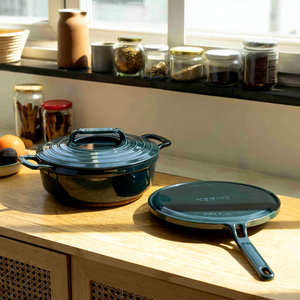
The pre-seasoned cast iron tawa is the traditional option. It comes already pre-seasoned with food-safe grapeseed oil and is ready to cook. With regular use, the surface gets better over time, and a light oil rub after drying helps keep the seasoning strong.
The TitaniumClad™ cast iron tawa is made differently. Its titanium-reinforced enamel surface makes it rust-proof and non-reactive, and it requires no seasoning. It is built for everyday cooking, including acidic foods like tomatoes and tamarind.
Choose pre-seasoned if you want a traditional cast-iron cooking experience and don't mind maintaining the seasoning.
Choose TitaniumClad™ if you want cast iron with less upkeep, no seasoning, and a rust-proof, non-reactive surface for everyday cooking.
How Do I Maintain and Care for Each Tawa Material?
Pre-seasoned cast iron: Use low to medium heat and a little oil. Wash with warm water and mild soap; avoid soaking it for long; dry it thoroughly after every wash. If the surface starts looking dry or food starts sticking, a light coat of oil can help refresh it.
TitaniumClad™ cast iron: Use low to medium heat with a thin layer of oil. For a deeper clean, boil water in the pan and rinse. Avoid steel wool and abrasive cleaners, and let the tawa cool before washing.
Ceramic (Flat Pan): Use low to medium heat to protect the coating. Stick to wooden or silicone utensils and avoid metal ones. Let the tawa cool before washing, and never put it under cold water straight after cooking. Clean it with a soft sponge and avoid rough scrubbers.
Stainless steel: Preheat the tawa on medium heat before adding oil. Use enough oil or butter to help prevent food from sticking. Clean it with warm, soapy water. It can handle scrubbing, but make sure to dry it well to avoid water spots.
What Common Mistakes Can Damage a Tawa?
-
Putting a hot tawa under cold water: Let the tawa cool before washing to avoid sudden temperature changes.
-
Using high heat on ceramic: Ceramic is designed for low to medium heat. High flames can damage the coating and shorten its lifespan.
-
Skipping seasoning maintenance on pre-seasoned cast iron: A light oil rub after drying helps keep the seasoning strong and the surface protected.
-
Using metal utensils on ceramic: Metal utensils can scratch the coating and reduce how well food releases.
-
Skipping oil before cooking on TitaniumClad™: Add a thin layer of oil before cooking to help food release naturally.
-
Using abrasive cleaners on TitaniumClad™: Avoid steel wool and abrasive cleaners to protect the enamel surface.
Conclusion
Once you understand the differences, choosing a tawa becomes much easier. Cast iron rewards patience when you're making dosa, ceramic makes cooking rotis and parathas easier, and stainless steel gives you durability without worrying about the coating wearing down.
Our Ceramic Flat Pan is made for everyday rotis and parathas. For dosa, we offer pre-seasoned and TitaniumClad™ cast iron tawas. The pre-seasoned tawa offers a traditional seasoned surface, while the TitaniumClad™ tawa is made for easy, everyday, acid-friendly cooking without the need for seasoning.
Explore our full range of cast iron tawas and ceramic tawas (Flat Pan) to find the one that suits your cooking best.
FAQ
Can I use one tawa for both dosa and roti?
Yes, but each material does a different job better. Our ceramic Flat Pan is designed for rotis and parathas. You can make dosa on it occasionally. For restaurant-style crispy dosa, both our pre-seasoned and TitaniumClad™ cast iron tawas can be used.
Which tawa is best for dosa?
Cast iron works well for dosa because it heats evenly and holds temperature well. We offer both pre-seasoned and TitaniumClad™ cast iron tawas.
Which tawa is best for roti and paratha?
Both cast iron and ceramic work well. Cast iron gives good puffing and browning, but needs seasoning and drying. Ceramic is easier to clean, needs less oil, and heats quickly, making it a practical everyday choice for rotis and parathas.
Is a heavier tawa always better for dosa?
Not necessarily. A tawa doesn't have to be heavy to make good dosa. The right heat and cooking technique matter too.
Why does my ceramic tawa dosa turn out soft instead of crispy?
Ceramic is made for low to medium heat, while crispy dosa needs higher heat. You use less oil and get easier cleanup with ceramic, but it isn't meant for the high heat needed for really crispy dosa.
How long does a cast iron tawa last compared to ceramic?
A properly cared-for cast iron tawa is built to last. Ceramic coatings gradually wear with daily use, like most coated cookware. Cast iron wins on longevity, while ceramic wins on everyday convenience.
